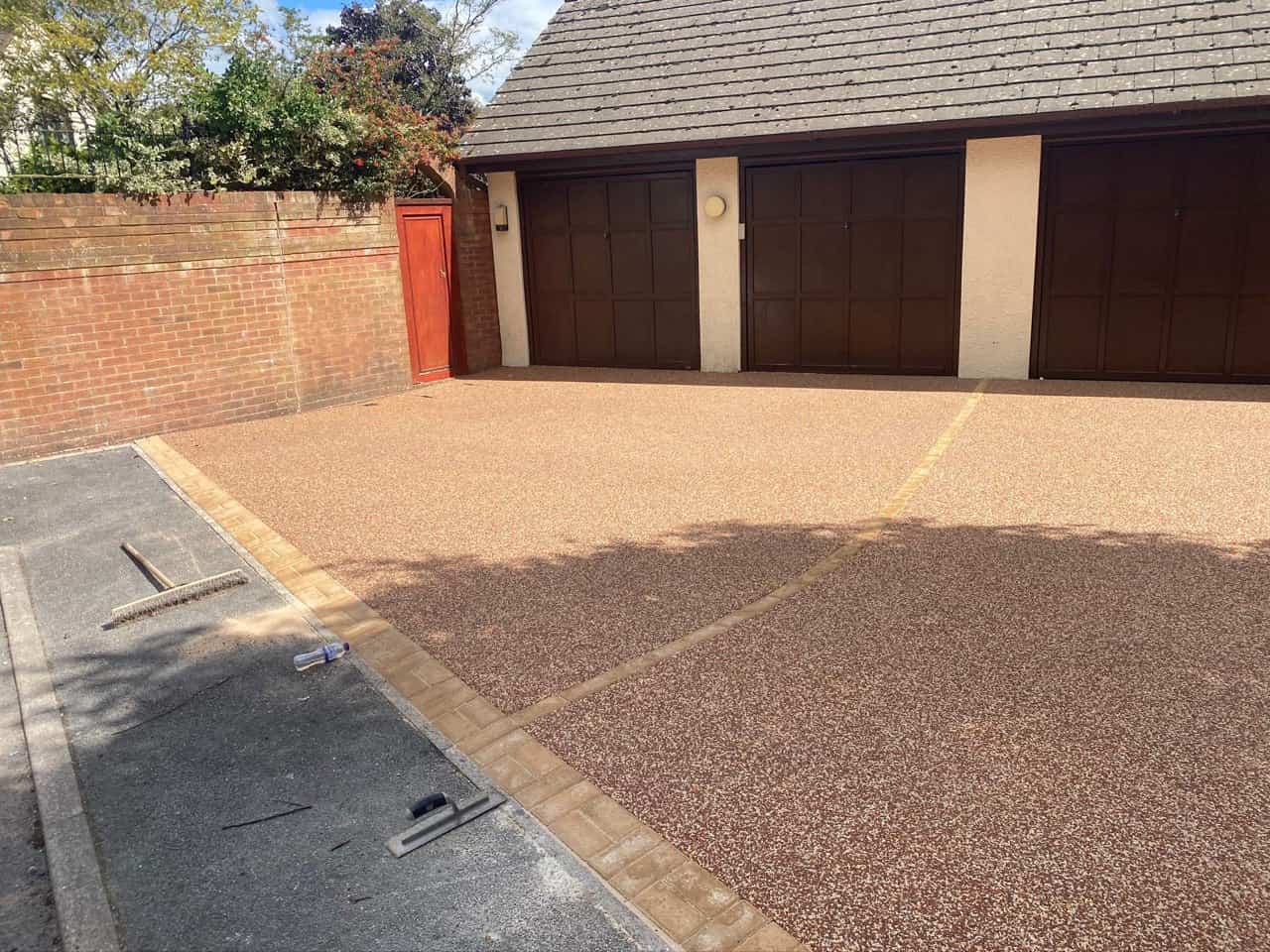
Why Is Tar & Chip Well Suited to Commercial Roads and High-Traffic Access Areas?
Commercial roads and access areas need to perform a practical job every day. Regular vehicle movements, repeated turning, delivery traffic and changing weather conditions can all place demands on the surface. For these areas to remain usable, the quality of the construction beneath the visible finish is just as important as the surfacing material itself.
For commercial properties and access routes in Camberley, Surrey, tar and chip can provide a practical surfacing option where a durable, textured finish is required. The process combines a prepared base with a bituminous binder and selected aggregate, creating a surface that can be particularly suitable for roads, entrances, parking approaches and other areas experiencing frequent vehicle movements. Its performance, however, depends heavily on preparation, drainage, levels and the suitability of the underlying construction.
Why Can Tar & Chip Work Well for Commercial Roads and Busy Access Areas?
Tar and chip surfacing is designed around a relatively straightforward principle. A bituminous binder is applied to a suitably prepared surface before aggregate is distributed across it and embedded into the binder.
The resulting finish has a naturally textured appearance and can provide a practical surface for vehicle access. For commercial applications, its value comes from combining this surfacing method with suitable groundwork and a layout designed around the way traffic actually uses the site.
Commercial Surfaces Experience Different Demands From Domestic Driveways
A commercial access road may experience vehicle movements throughout the working day.
Cars, vans, delivery vehicles and other traffic can repeatedly follow the same routes across the surface.
This creates a different usage pattern from a driveway serving a single household.
The surfacing and supporting construction therefore need to be considered according to the frequency and type of traffic expected.
Repeated Vehicle Movements Need a Suitable Foundation
No surface material should be expected to compensate for weak groundwork.
Where vehicles regularly travel across an area, loads are transferred through the surface into the supporting layers below.
A properly prepared base helps distribute these loads more consistently.
This makes ground preparation fundamental to a successful tar and chip commercial road or access area.
Tar & Chip Provides a Textured Surface
One of the defining characteristics of tar and chip is its aggregate finish.
Rather than producing a completely smooth appearance, the exposed stone creates a naturally textured surface.
This can work particularly well for commercial access routes where practicality and a clearly defined driving surface are important.
Aggregate selection can also influence the overall appearance of the finished area.
The Surface Can Suit Long Access Roads
Commercial premises do not always have short entrances.
Some sites include substantial access roads connecting an entrance with parking, operational or other frequently used areas.
Tar and chip can be considered for these larger stretches where a consistent vehicle surface is required.
The complete route should still be designed around ground condition, traffic patterns, drainage and transitions between adjoining areas.
It Can Create a Consistent Surface Across Larger Areas
An access route containing several different materials or numerous old repairs can become visually and functionally inconsistent.
Where the underlying construction is suitable or can be prepared appropriately, tar and chip surfacing can create a more coordinated finish.
This can help make the driving route clearer while reducing the fragmented appearance associated with multiple surface types.
Vehicle Entrances Need Particular Attention
The entrance to a commercial property can experience some of the most concentrated use.
Almost every vehicle using the site may cross the same relatively narrow section.
Vehicles may also slow, stop or change direction as they enter.
This means the entrance should be treated as an important part of the overall construction rather than simply the starting point of the surface.
Turning Areas Can Experience Additional Stress
Vehicles do not always travel in straight lines.
Turning movements can place different demands on a surface from straightforward forward travel.
Commercial areas where vehicles repeatedly manoeuvre should therefore be planned around these movements.
Suitable base construction and careful surfacing help ensure that the complete area is designed for its intended use rather than only its appearance.
Repeated Traffic Routes Should Be Considered During Design
Drivers naturally follow similar routes when entering, leaving and travelling around a site.
These repeated wheel paths can concentrate loading in particular areas.
Identifying them during the planning stage allows the groundwork and surfacing to be considered as part of the complete traffic layout.
This is especially important where one narrow route carries most of the site’s vehicle movements.
Parking Approaches Need a Practical Surface
The route leading towards parking areas can experience frequent braking, turning and low-speed manoeuvring.
An inconsistent or deteriorating surface can make these movements less comfortable.
Tar and chip can create a defined approach where the supporting construction and site layout are suitable.
The surface should connect logically with the parking area rather than being treated as an isolated section.
Delivery Routes Require Careful Planning
Commercial sites receiving regular deliveries may experience concentrated vehicle activity around particular routes.
The entrance, approach and manoeuvring areas can all receive repeated use.
Before surfacing, it is useful to understand where this traffic occurs most frequently.
This allows the construction to be planned around actual site use rather than assuming that every part of the area experiences identical loading.
High-Traffic Areas Depend on Good Ground Preparation
The visible tar and chip finish is only the upper part of the construction.
If the ground beneath contains weak areas, settlement or significant deterioration, problems can eventually become visible at the surface.
Ground preparation should therefore identify and address unsuitable sections before the final surfacing is applied.
This is particularly important for commercial routes because frequent traffic can expose underlying weaknesses more quickly.
Existing Surface Condition Should Be Assessed First
Many commercial roads are resurfaced rather than created on completely untouched ground.
The existing area may contain cracks, depressions, previous repairs or areas of movement.
These features provide useful information about the condition beneath.
Professional assessment can determine whether the existing construction provides a suitable basis for further work or whether additional preparation is needed.
Existing Damage Should Not Simply Be Covered
A new surface can improve the appearance of a tired commercial road significantly.
However, visual improvement should not be used to conceal structural problems.
If the existing surface contains substantial movement, weak sections or recurring depressions, the underlying cause should be considered before resurfacing.
Covering an unstable area without appropriate preparation can allow the same problem to influence the new surface later.
Potholes Can Indicate More Than Surface Wear
A pothole is an obvious defect, but simply filling the visible hole may not always address the complete problem.
The surrounding edges and supporting material should also be considered.
Where several potholes have developed across the same route, there may be a broader issue involving surface deterioration, water or the supporting construction.
Preparing the area properly before tar and chip surfacing helps avoid treating only the visible symptoms.
Cracking Patterns Can Provide Useful Information
An isolated crack can differ significantly from widespread cracking across a commercial access road.
The pattern can help indicate whether deterioration is localised or more extensive.
Before surfacing, these areas should be assessed rather than automatically hidden.
Understanding why the existing surface has deteriorated provides a stronger basis for planning the replacement or resurfacing work.
Sunken Areas Need Investigation
Depressions in a commercial road can indicate settlement beneath the surface.
Simply adding material to make the area look level does not necessarily resolve the cause.
If the supporting layers remain unstable, further movement may occur.
Proper preparation allows affected sections to be addressed before the final tar and chip surface is created.
A Stable Sub-Base Is Essential
Commercial road performance depends heavily on the construction beneath the visible surface.
A suitable sub-base provides support and helps distribute traffic loads.
Where this layer is inconsistent, different sections can respond differently under repeated vehicle movements.
A well-prepared foundation gives the tar and chip surface a more appropriate platform from which to perform.
Compaction Is an Important Part of Preparation
Suitable groundwork needs more than simply placing material into position.
The supporting layers need appropriate compaction.
Poorly consolidated material can continue settling after surfacing has been completed.
This may lead to changing levels or depressions.
Preparing the foundation correctly before surfacing is therefore fundamental to the finished road.
Drainage Matters on Commercial Roads
Rainwater needs to be considered as part of the complete surface design.
Where water repeatedly collects, it can make the road inconvenient to use and may contribute to deterioration in vulnerable areas.
Ground preparation should establish appropriate levels and address obvious drainage concerns before the final surface is applied.
The objective is to manage the site as a complete construction rather than expecting the surfacing material alone to solve water-related problems.
Standing Water Can Reveal Low Areas
Puddles forming repeatedly in the same places provide useful information about surface levels.
They may indicate depressions, settlement or unsuitable falls.
These conditions should be investigated before resurfacing.
Correcting the underlying profile can provide a better foundation for the new tar and chip finish.
Water Can Exploit Existing Surface Weaknesses
Where cracks, potholes or damaged edges already exist, water can reach vulnerable areas of the construction.
Repeated wet conditions can make existing deterioration more difficult to manage.
Timely repair and suitable preparation help reduce the opportunity for these defects to expand before the area is resurfaced.
Road Edges Need Adequate Support
The centre of a commercial road is not the only part that matters.
Edges can deteriorate where vehicles repeatedly travel too close to unsupported sections or where the underlying construction is inadequate.
Once an edge begins breaking away, the usable width of the road can gradually reduce.
Proper edge construction helps define and support the tar and chip surface.
Commercial Road Width Should Reflect How the Area Is Used
A road that is too narrow for normal vehicle movements can encourage traffic towards vulnerable edges.
Before resurfacing, it can be useful to consider whether the existing layout supports the intended use.
Where the available space permits, thoughtful planning can create clearer driving routes and reduce unnecessary pressure on particular sections.
Tar & Chip Can Work With Clearly Defined Edges
A well-defined road is easier to understand visually.
Suitable edging or properly constructed boundaries can establish where vehicles are intended to travel.
This can be particularly useful where a commercial road runs beside softer ground or landscaped areas.
Edge planning should form part of the initial preparation rather than being treated as an afterthought.
Larger Commercial Areas Need Consistent Preparation
The larger the surface, the greater the possibility that underlying conditions will vary from one section to another.
One area may have a sound existing base while another has experienced settlement or repeated repairs.
Creating a continuous tar and chip finish across these sections requires understanding those differences first.
Consistent preparation helps the completed surface perform more uniformly.
Previous Repairs Can Reveal High-Stress Locations
Older commercial roads often contain patches showing where previous work has been carried out.
These areas can provide useful clues about how the road has performed.
Repeated repairs in one location may indicate concentrated vehicle movement, drainage problems or weakness within the supporting layers.
This information can be used when planning more comprehensive surfacing work.
High-Traffic Areas Need More Than Cosmetic Resurfacing
A tired road may look dramatically improved after receiving a new surface, but appearance should not be the only objective.
Commercial roads need to remain practical under regular use.
If the underlying construction is failing, resurfacing should be preceded by appropriate remedial preparation.
The finished appearance should reflect sound work beneath rather than conceal unresolved deterioration.
Surface Levels Affect Vehicle Movement
Unexpected depressions and abrupt changes in level can make commercial access routes uncomfortable to drive across.
They can also influence where rainwater collects.
Preparation provides an opportunity to create a more consistent profile before tar and chip surfacing is applied.
This can improve both the appearance and everyday usability of the road.
Transitions Between Surfaces Need Careful Detailing
Commercial roads often meet other hardstanding, parking or entrance surfaces.
The transition between them should be planned carefully.
Poorly matched levels can create awkward changes where vehicles cross from one surface to another.
Good preparation establishes these connections before the final tar and chip layer is installed.
Tar & Chip Can Suit Rural-Style Commercial Settings
The exposed aggregate appearance of tar and chip can provide a less visually uniform finish than some alternative surfacing materials.
For certain commercial environments, this can help the road sit naturally within its surroundings while still creating a clearly defined vehicle route.
The aggregate and overall design should be selected according to the site rather than relying on appearance alone.
Aggregate Selection Influences the Finished Surface
The stone used within tar and chip surfacing contributes significantly to its final appearance and texture.
Selection should form part of the overall surfacing plan.
However, aggregate choice cannot compensate for inadequate groundwork.
The most important factors remain the suitability of the construction, preparation and intended use of the road.
Commercial Surfacing Should Be Planned Around Actual Traffic
It is useful to understand which vehicles use the area and where they travel.
A lightly used secondary route may experience different demands from the main entrance.
Likewise, a parking approach may behave differently from a turning area.
Considering these traffic patterns allows the surfacing project to respond to actual operational requirements.
Frequently Used Routes Benefit From Clear Layouts
An organised commercial access area can make vehicle movement more straightforward.
A consistent surface helps define the main route through the site.
Where several old surfaces or repaired sections exist, resurfacing can help create a clearer visual connection between the entrance and the areas vehicles need to reach.
This can improve the overall coherence of the site.
Tar & Chip Can Be Used for More Than the Main Road
Depending on the property and construction requirements, tar and chip may also be considered for connected access areas.
This can help create a coordinated finish across different vehicle routes.
The suitability of each section should still be assessed individually because traffic levels, base condition and drainage can vary across the same commercial property.
Regular Use Makes Early Defects Worth Investigating
A small area of deterioration on a frequently used road can receive hundreds of further vehicle movements.
This can place continuing stress around the edges of the defect.
Investigating damage while it remains localised can help determine whether repair is appropriate before wider resurfacing becomes necessary.
Not every small defect means the complete road needs replacing.
Localised Repairs Can Remain Appropriate
Where most of a commercial tar and chip surface remains sound, a clearly defined area of damage may be suitable for targeted attention.
There is little value in disturbing a large, serviceable area unnecessarily.
Professional assessment can establish whether deterioration is genuinely localised or part of a broader pattern.
This condition-led approach helps ensure that the extent of work matches the actual surface.
Widespread Deterioration Requires a Broader View
Where potholes, cracking, settlement and edge deterioration are appearing throughout the road, repeatedly addressing individual defects may become less effective.
The complete route should then be assessed.
This does not automatically determine what work is required, but it allows the relationship between multiple problems to be understood.
A broader surfacing solution can then be considered where appropriate.
Warning Signs a Commercial Access Road Needs Attention
Professional assessment may be worthwhile where a commercial road or high-traffic area has:
- recurring potholes;
- widespread cracking;
- loose or deteriorating surface material;
- noticeable depressions;
- repeated standing water;
- damaged or breaking edges;
- several previous repair patches;
- uneven transitions between different surfaces;
- sections that have settled differently;
- deterioration concentrated around turning areas;
- repeated damage along main vehicle routes.
These signs help identify where investigation is needed. They do not automatically mean that the complete surface requires replacement.
Tar & Chip Performance Depends on the Complete Construction
It is easy to focus entirely on the visible aggregate finish.
However, successful commercial surfacing depends on several connected elements.
The supporting ground, sub-base, existing surface condition, levels, drainage, edges and final tar and chip application all contribute to the result.
Ignoring one part of the construction can undermine the benefits of the others.
Preparation Should Match the Intended Use
A surface should be constructed for what it is expected to do.
Commercial roads experiencing regular traffic need preparation appropriate to those conditions.
This is why a professional assessment should consider the site rather than applying exactly the same approach to every project.
The correct groundwork is determined by the existing area and its intended use.
Why Professional Tar & Chip Installation Matters
Tar and chip surfacing may appear straightforward when viewed only as binder and aggregate, but the finished road depends heavily on planning and preparation.
Existing defects need to be assessed, unsuitable sections addressed, levels established and the surface prepared correctly before the final application.
Professional installation considers these factors as parts of one project.
This helps create a commercial road or access area designed around actual traffic rather than simply providing a new-looking surface.
Commercial Tar & Chip Surfacing in Camberley, Surrey
At NS Driveways Camberley, we understand that commercial roads and high-traffic access areas need to be planned around how vehicles actually use them. Entrances, repeated wheel paths, parking approaches and turning areas can all place different demands on the surface.
Tar and chip can provide a practical surfacing option where the existing area is properly assessed and the supporting construction is prepared appropriately. Particular attention should be given to weak sections, potholes, settlement, drainage and damaged edges before the final surface is applied.
For commercial properties and access routes in Camberley, Surrey, a condition-led approach helps ensure that the finished tar and chip surface is supported by groundwork suitable for its intended use.
Conclusion
Tar and chip can be well suited to commercial roads and high-traffic access areas because it provides a practical, textured surface that can be used across entrances, access roads and other frequently travelled vehicle routes. Its ability to create a consistent finish over larger areas can also make it useful where an existing commercial surface has become fragmented or tired.
However, the success of tar and chip surfacing depends on considerably more than the visible finish. Commercial traffic places repeated demands on the underlying construction, making a stable base, suitable compaction, correct levels, effective water management and properly supported edges particularly important.
Existing potholes, cracking and settlement should therefore be investigated rather than simply covered. Where damage remains localised, targeted repair may still be appropriate. Where deterioration is more widespread, a broader surfacing approach may provide a more coherent solution.
If you are considering tar and chip surfacing for a commercial road or high-traffic access area in Camberley, Surrey, contact NS Driveways Camberley. We can assess the existing surface, traffic requirements and groundwork to recommend an appropriate surfacing approach based on how the area needs to perform.
Call us on: 01276 535 294
Click here to find out more about NS Driveways Camberley
Click here to complete our contact form and see how we can help with your driveway needs.